
Budget arrival data separately from ongoing 30–90-day use, and compare local prepaid plans, monthly contracts and travel eSIM renewals on an all-in basis. Include calling/SMS needs and hotspot capacity.
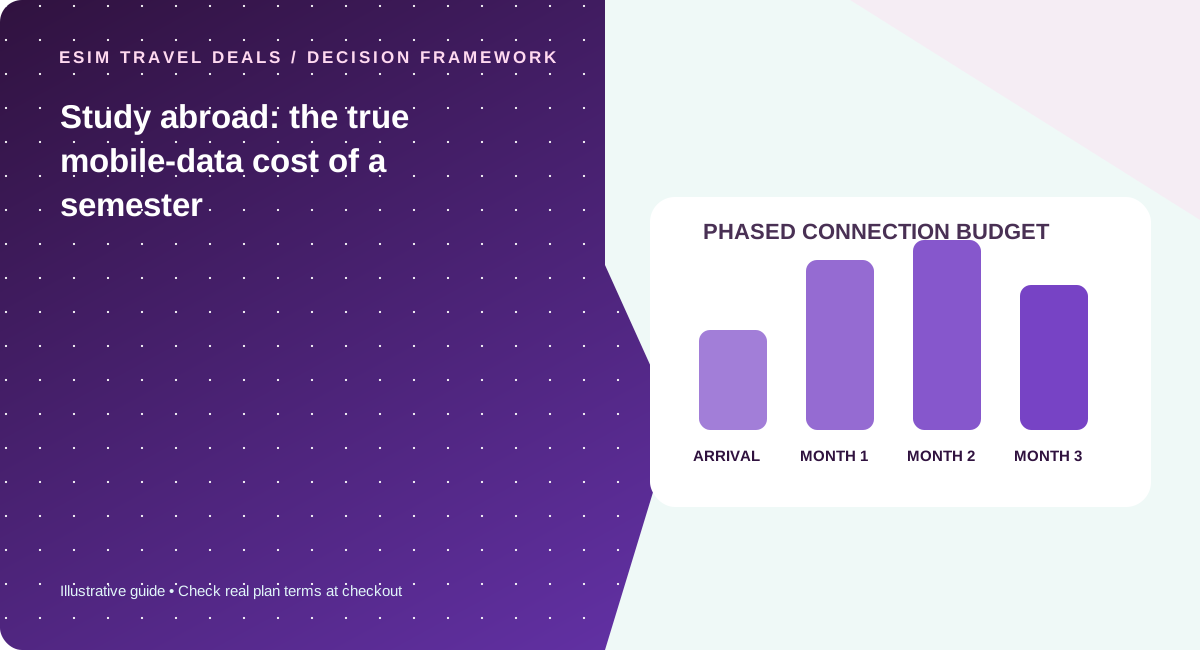
A semester has different demand phases
Arrival involves maps, temporary accommodation, banking and coordination. Later weeks involve commuting, classes and occasional travel home. Your first plan can be temporary while you research local options; making a six-month commitment at the airport may be unnecessary.
Use a monthly cost table
Record each offer’s data allowance, valid days, renewal price, tax, setup cost, local number provision, tethering and cancellation terms. Multiply repeat charges by the actual number of billable periods rather than assuming a quarter equals exactly 90 days.
Video calls alter the budget
One hour of video conferencing may consume far more than a day of text messages. Estimate the number of weekly meetings, use dorm Wi-Fi for heavy activity, and keep an emergency data buffer. A consumer plan with low hotspot limits may be unsuitable even if it advertises large phone-only allowances.
Check total economic value, not just data
A local SIM that provides required identity for a landlord, university or bank may be useful even if it costs slightly more. A travel eSIM can remain a valuable backup for weekend cross-border trips. Treat the two products as potentially complementary, not always mutually exclusive.
Total-cost model with real periods
Imagine you arrive on 27 August, begin classes on 1 September and remain until late November. A “three month” stay may span different billing periods from a 90-day prepaid package, so use the actual dates. Build one column for an arrival eSIM, another for monthly local prepaid service and a third for the option of renewing the eSIM several times. Add activation, renewals, taxes, and any home-SIM charges for required OTPs or calls. Mark the cutoff for cancellation, since an automatic renewal can occur just before departure. The cheapest base data price may not be the cheapest functional plan if your university requires a local number or if you tether a laptop heavily. Always compare the same usable services and the same calendar, and validate the final checkout rather than treating example arithmetic as a vendor offer.
Data discipline without sacrificing coursework
Coursework can involve file submissions, cloud drives, lecture recordings and unpredictable remote meetings. Estimate high-demand use from the semester timetable, and keep a buffer for travel days or outages. Put large downloads, backups and operating-system updates on campus or accommodation Wi-Fi where reliable and appropriate. A data-only travel profile may be a good arrival bridge, but local service may be more convenient for regular phone calls, account registration or inexpensive repeat top-ups. If you have multiple eSIM profiles on one phone, check which is active rather than assuming simultaneous service works identically on every device. A smart budget model highlights the combinations: a low-cost local plan for ongoing needs plus a travel backup for cross-border weekends can beat trying to make a single advertised package do everything.
Five checks before you pay
- Separate arrival budget from semester budget
- Compare total renewal charges over real dates
- Confirm local number and SMS eligibility
- Estimate laptop/hotspot requirements
- Plan exit and renewal conditions
Common mistakes to avoid
- A cheaper data-only plan may not meet local registration needs
- Hotspot restrictions can dominate the remote-study use case
- Do not mix taxes-included and taxes-excluded quotes
Work with your real itinerary or quotes
Use our free in-browser calculator, then verify live plan stock, exact destination coverage and final charges directly with TripoSIM.
Commercial disclosure: we are owned by BroadNet and promote TripoSIM. No specific retail SKU or guaranteed price is represented here.
Source notes and review standard
This page is educational editorial analysis dated 5 November 2026. It does not claim field measurements, current retailer inventory, exclusive third-party quotes or verified network speeds. Confirm the exact product terms and local phone configuration before paying.
Additional context: our research methodology and editorial standards.
Continue reading
eSIM coupon, promo code or bundle: what counts as a real deal?
A reproducible worksheet for separating advertised discounts from genuine lower checkout totals.
Roaming pass versus travel eSIM: a seven-day comparison worksheet
How to compare a carrier day-pass quote with a travel eSIM without fake savings percentages.